
Covina Public Records Inventory
Covina is not a one-portal records city. The City Clerk manages city-created and city-maintained records, while Los Angeles County holds the highest-value identity, court, property, and vital-record systems. California law opens many records, but it does not make every index free, searchable by name, or available online. Some records are public but office-only. Others are copy-request records with eligibility rules.
| Record Set | Custodian | Online Index | Access |
|---|---|---|---|
| City agendas, minutes, ordinances, permits | City of Covina | Laserfiche and city pages | Portal or CPRA request |
| Deeds and recorded property documents | LA County RR/CC Recorder | No official web index | In-person name-year index, online/mail copy request |
| Assessor parcels and GIS | LA County Assessor | AIN, address, legal, and map search | Free portal |
| Civil, family, probate, small claims, criminal | Los Angeles Superior Court | Paid name searches and case-number summaries | Portal, document images, archives |
| Birth, death, marriage | LA County RR/CC and CDPH | Request portals, not broad public search | Authorized or informational copies where allowed |
| Police reports and calls for service | Covina Police Department | No broad public case portal found | Written request or police CPRA route |
| Custody and registry records | LASD, CDCR, California DOJ | Online locators and registry | Free lookup with legal limits |
The City of Covina specifically redirects birth, death, and marriage requests to the Los Angeles Registrar-Recorder/County Clerk. That city-versus-county split is important. A request sent to City Hall for a county vital record or county deed will not reach the office that keeps it.
Covina Records Split Three Ways
Municipal records begin with the City of Covina records page. The city describes access to its Laserfiche archive, its California Public Records Act process, and its limits for vital records. City Council agendas, resolutions, minutes, and ordinances are listed from 1980 to present, and building permits are described as searchable by street address.
Los Angeles County becomes the main records layer for recorder, clerk, assessor, tax, court, election, and sheriff records. State systems then cover statewide vital-record copies, professional licenses, business entities, CDCR custody, Safe at Home address confidentiality, and consumer privacy tools. A Covina records request should name the record, the likely custodian, the date range, the person or address involved, and the copy type needed.
LA Recorder Name-Year Index
The sharpest Covina open-records quirk is the Los Angeles County Recorder index. Real-estate records are public, but the official grantor and grantee index is not posted online. The RR/CC says records are maintained by name and year, not by street address. Staff also do not perform index searches by telephone.
The RR/CC viewing rules route 1851-1957 records to the lower level at Norwalk headquarters and 1958-present records to the second floor. Appointments may be scheduled up to two weeks in advance. Copy orders can be placed online through the RR/CC path, in person, or by mail when the requester has a grantor or grantee name and an approximate recording date.
| Channel | Field or Mechanic | Type | Required | Notes |
|---|---|---|---|---|
| In-person index | Grantor name | Name index | Yes | Alphabetical name-year index |
| In-person index | Grantee name | Name index | Yes | Either side of the transfer can lead |
| In-person index | Year recorded | Year | Yes | The index is organized by name and year |
| Copy request | Grantor or grantee name | Text | Yes | Needed because address search is not offered |
| Copy request | Approximate recording date | Date or year | Yes | Used to locate the document |
| Appointment | Appointment date and time | Scheduler | Yes | Available up to two weeks ahead |
Note: For an address-only lead, use the Assessor first, then bring the name and year clue to the recorder.
Covina Property Records Path
Property research for Covina starts with the Los Angeles County Assessor Portal, not the recorder. The Assessor supports search by AIN or address, search by legal description, and map search. The map viewer includes parcel, city, community, ZIP, school district, supervisorial district, SFR cluster, and recent-sales layers.
That order matters because a Covina mailing address may not sit inside city limits. The city notes that ZIP codes 91722, 91723, and 91724 can include addresses outside Covina, and street numbers above 2999 are generally in unincorporated Los Angeles County. Check jurisdiction before asking Covina for permits or code records.
Address caution. A Covina mailing city is not proof of City of Covina jurisdiction. Use the city jurisdiction check, Assessor city layers, or county services before filing a local request.
Covina Court Records Access
Modern Covina trial-court records are handled by the Superior Court of California, County of Los Angeles. The LASC access hub links to paid civil, small-claims, family, probate, and criminal name searches, plus case summaries and document images. The civil name search covers unlimited civil, probate, and family matters from 1983, limited civil from 1991, and small claims from 1992. The criminal defendant index covers felony matters from 1980 and misdemeanor matters from 1988, with some older automated data.
The LASC case-summary form shows the case-number route after a record is known.
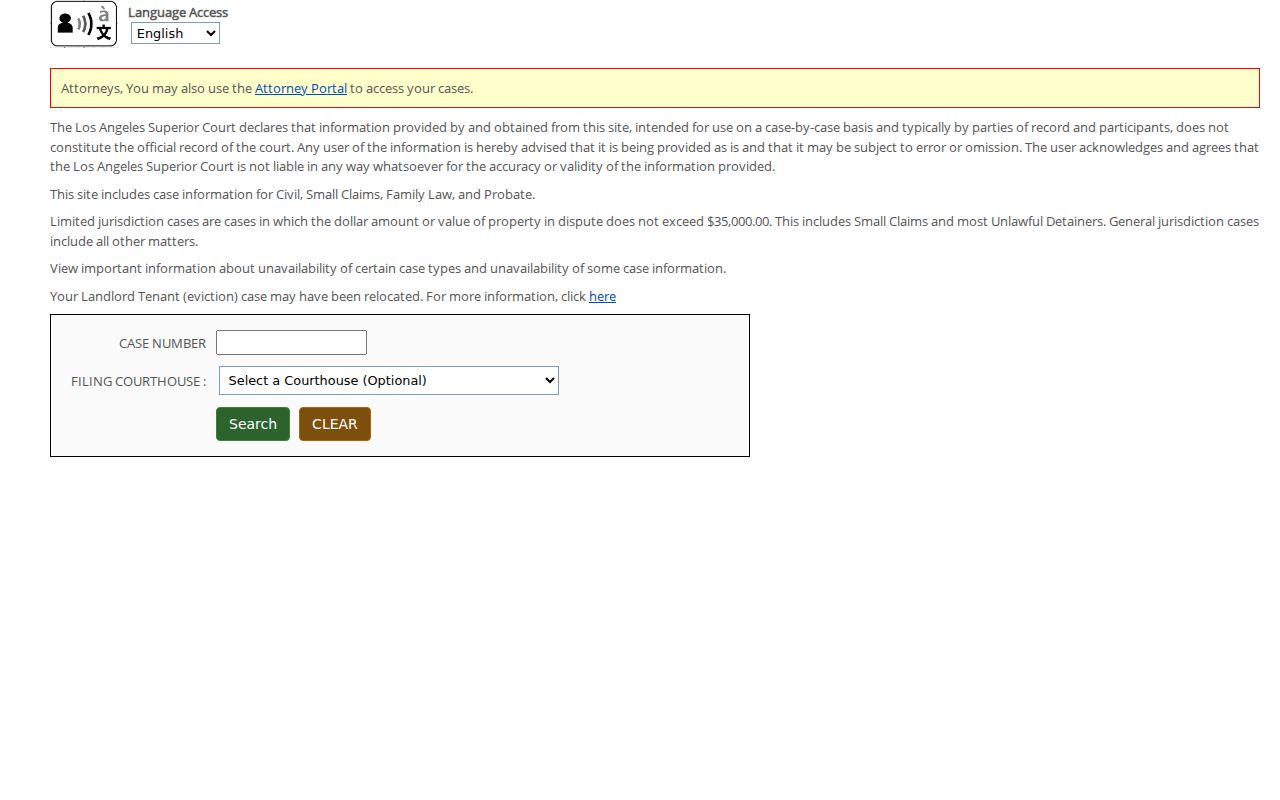
The case-summary route is useful when a paid name search, mailed notice, or courthouse file gives the case number. It is not a substitute for a party-name search when the case number is unknown.
Covina Vital Records Limits
Covina birth, death, and marriage copies come from the Los Angeles County RR/CC for local events or from California Department of Public Health Vital Records for statewide copies. LA County coverage begins with birth records in 1866, death records in 1877, and marriage licenses in 1852. Same-day county coverage is narrower for many modern requests, while older and informational copies may be mailed.
California Health and Safety Code section 103526 controls authorized certified copies of birth, death, and marriage records. Many requesters can receive informational certified copies where allowed, but those copies are marked as not valid for identity. Confidential marriage records are stricter: only the parties or a court order can obtain a copy. Divorce decrees come from the Superior Court, while CDPH divorce certificates are not the decree.
Covina Police and Custody Records
Covina Police Department records require a written request for report copies. The department lists request categories such as arrest report, crime report, traffic collision, domestic-violence report, current arrest information or booking sheet, incident report or calls for service, photos, and other. Release depends on state and federal rules, and the department says requests may take up to 10 working days after receipt.
County custody records run through the Los Angeles County Sheriff's Department inmate locator, while state prison custody appears in CDCR's CIRIS. The CDCR CIRIS search can show name, CDCR number, age, current location, commitment county, admission date, and parole-hearing information for current state custody.
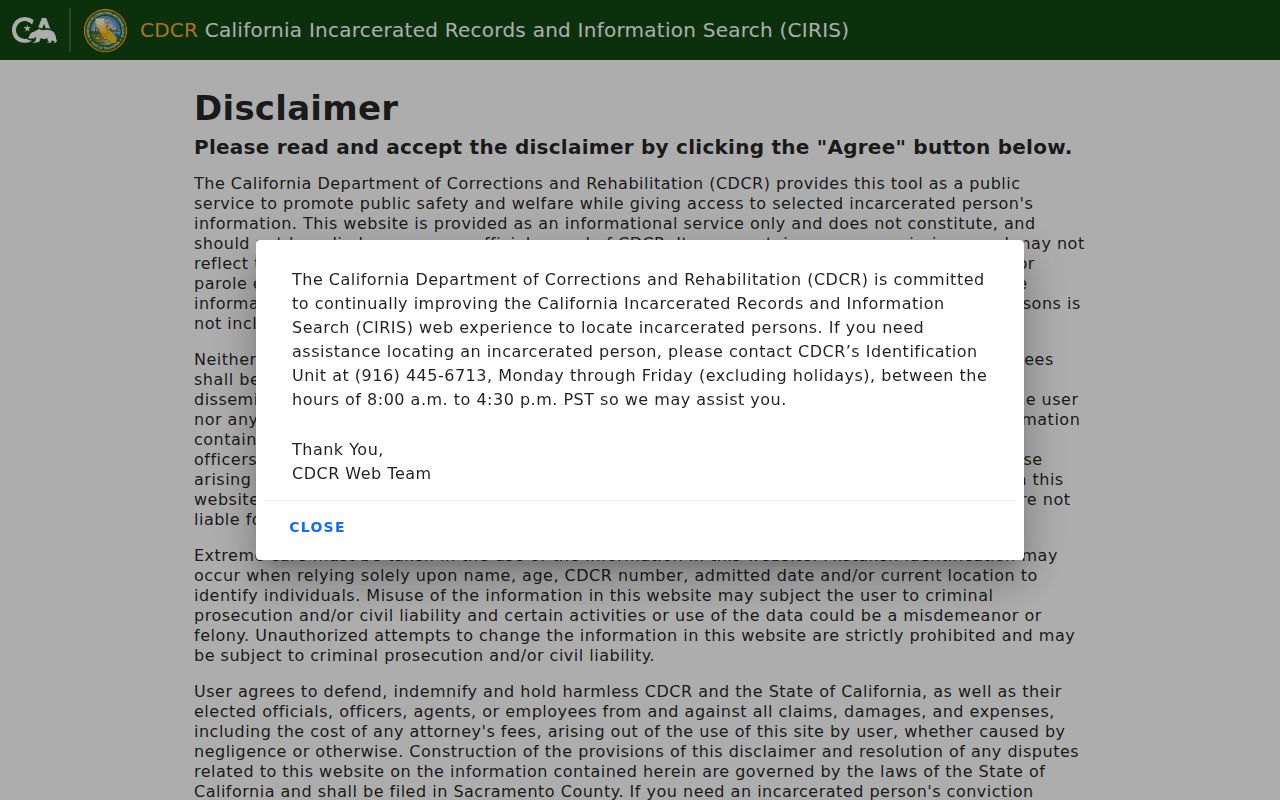
For common names, CDCR notes that date of birth may be needed through its ID Unit. County and state custody systems are separate, so check the correct level before assuming no record exists.
Covina Registry Records Rules
The California Megan's Law website is administered by the California Department of Justice under Penal Code section 290.46. It publishes only the registrant information that California law allows. Some registrants are not publicly displayed, and the registry itself warns against misuse.
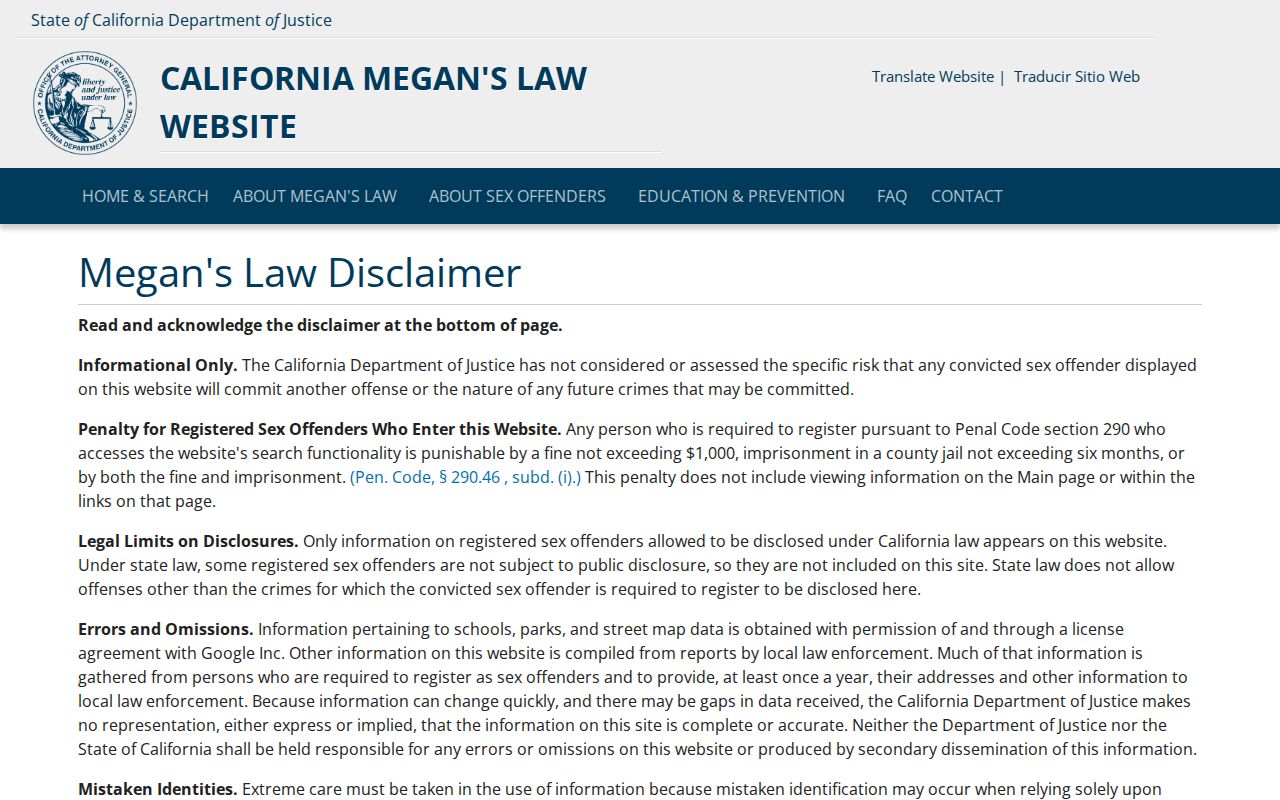
Registry data should be read as a public-safety record with statutory limits, not as a complete list of every person subject to registration. Misuse can carry penalties, and persons required to register face separate restrictions on using the search system.
Fees Before Covina Copies
Fees vary by custodian and record type. The LA County RR/CC fee schedule lists real-estate copy fees, recording charges, and special recording fees. Plain real-estate copies are $5 for the first page and $3 for each added page. Certified copies are $6 for the first page and $3 for each added page. Complete documents must be purchased.
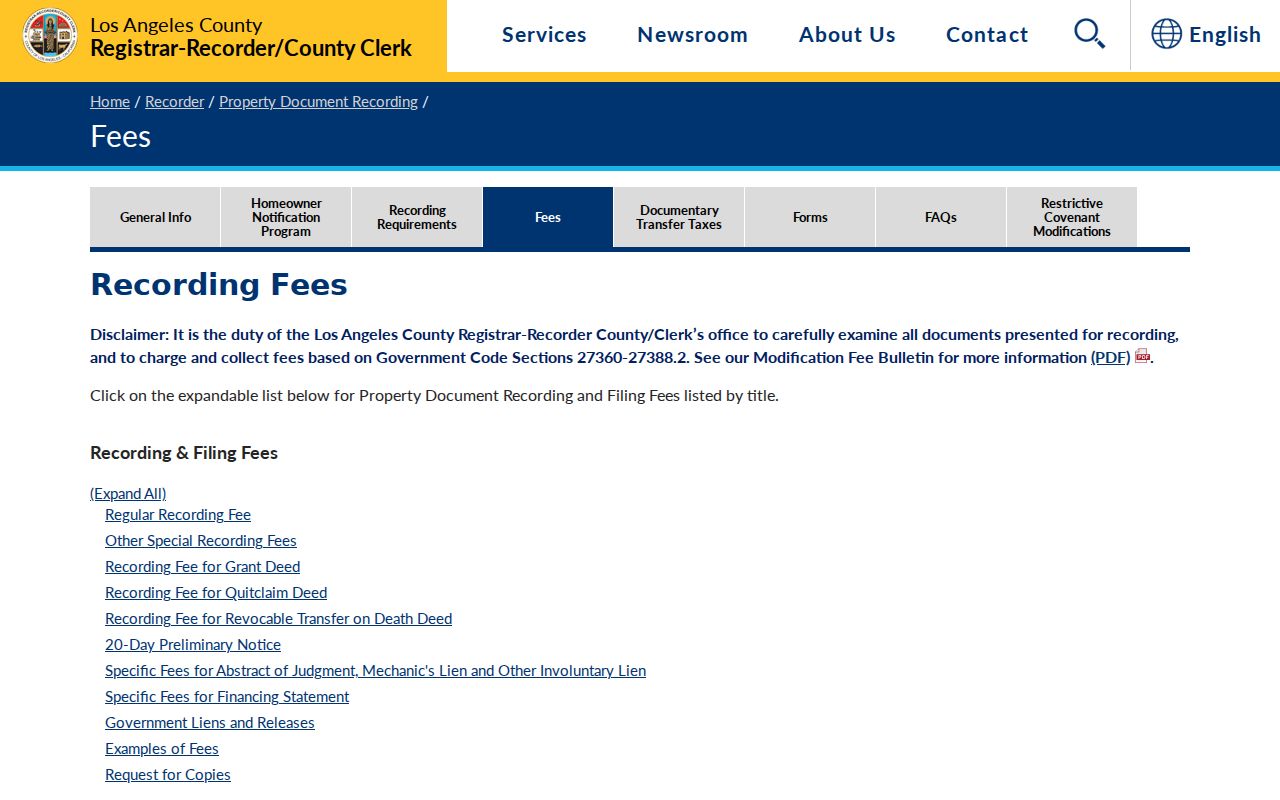
Recent fee changes matter for recording, too. Effective June 1, 2026, Los Angeles County increased the Real Estate Fraud Prosecution fee from $5 to $10. Vital-record fees also differ by office: LA County lists birth at $34, death at $26, and marriage at $19, while CDPH 2026 statewide fees list birth at $31, death at $26, marriage at $19, and dissolution at $18.
Copy cost check. Verify fees with the custodian before paying a mail solicitation or third-party offer. Official copies are often cheaper than private deed-copy mailers.
Covina Public Records Offices
The right counter depends on the record. City Hall handles city-maintained records. The RR/CC in Norwalk handles recorder, county clerk, and many vital-record requests. The court, assessor, police, CDCR, and DOJ registry each run their own access channel.
Covina City Clerk
125 E. College Street, Covina, CA 91723-2199
(626) 384-5400
LA County Assessor
500 W. Temple Street, Los Angeles, CA 90012
(213) 974-3211
Assessor Portal
Los Angeles Superior Court
Countywide court access hub
Use LASC portal contacts by case type
Access a Case
Requesting Covina Public Records
California Public Records Act requests use Government Code section 7920.000 et seq. Covina, Los Angeles County agencies, and most California public agencies must determine within 10 days whether a request seeks disclosable records. Written notice may extend that determination by up to 14 days for unusual circumstances.
Covina accepts city CPRA requests in person, by mail, by email, or by fax. The city asks for a clear and specific description, such as dates, addresses, titles, or document types. Requests submitted after normal business hours are treated as received the next business day. RR/CC public-records requests use a separate county request center for that office.
The RR/CC Request Center lets requesters make and browse requests tied to that county office.
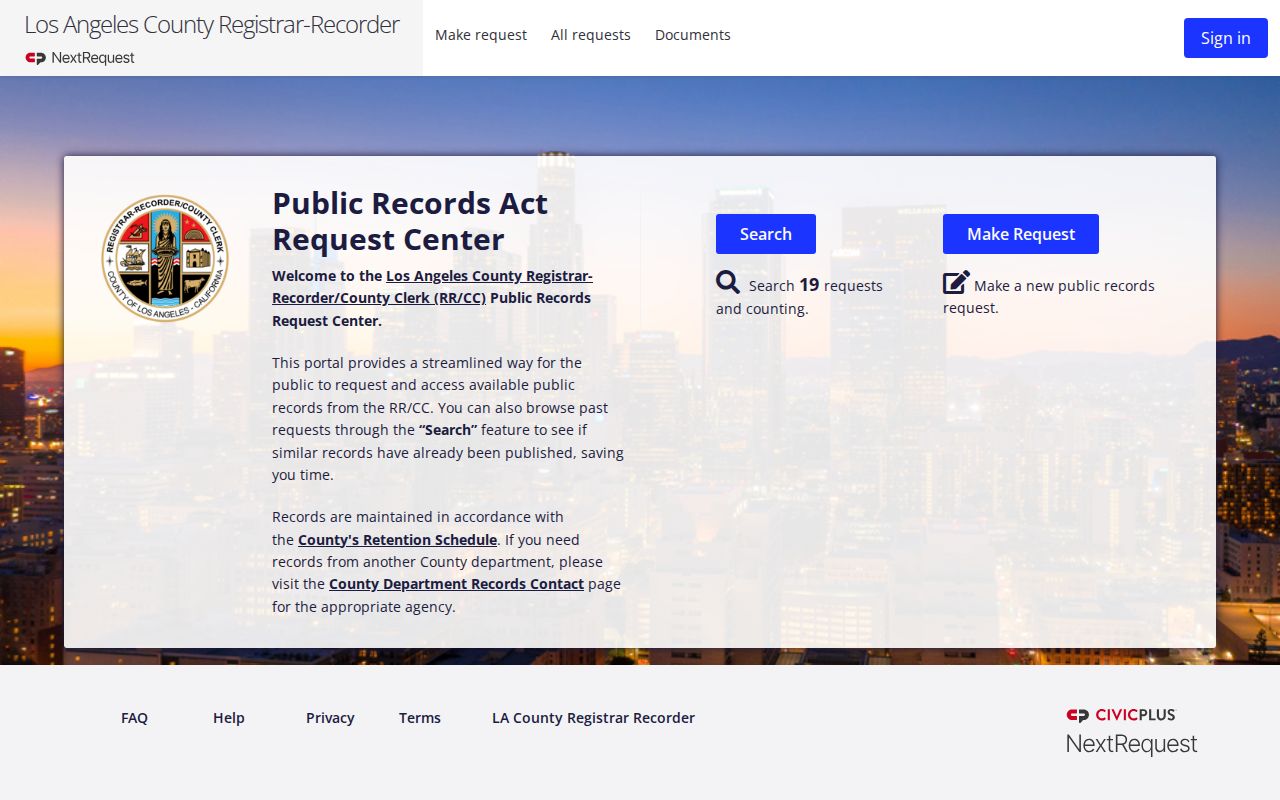
Use the request center for RR/CC administrative records or records handled through that office. Deed copies, vital-record certificates, and court documents may still require their own dedicated order forms or portals.
- Identify the custodian before filing. City, county, court, and state offices do not share one request queue.
- Check the official portal first when a portal exists. A portal result may answer the request without staff search time.
- Describe the record with names, dates, addresses, case numbers, AINs, or document types.
- Ask for inspection, electronic copies, plain copies, or certified copies, depending on the need.
- Pay only the fee the custodian cites, and narrow the request if the office identifies exempt or overly broad material.
Restricted Covina Records
Open records do not override every privacy rule. Sealed court files, juvenile records, adoption records, confidential family-law materials, restricted law-enforcement data, DMV personal information, and some victim or witness information may be closed or partly redacted. Voter registration data is also restricted in California and is not a routine public lookup. For detail on that record set, use the Covina voter records page.
- Index
- A search aid that points to a record, often by name, year, case number, or document number.
- Image
- A scanned or electronic copy of the actual filed document.
- Certified copy
- An official copy issued with the custodian's certification, often required when a plain copy is not enough.
- Custodian
- The office that keeps and releases the record.
- Exemption
- A legal reason an agency can withhold or redact part of a record.
Covina Privacy and Deletion Limits
California privacy rights can help with data brokers, but they do not erase official records held by courts, recorders, assessors, or agencies. The California DROP deletion system opened in 2026 for requests to registered data brokers, with processing duties beginning August 1, 2026. That tool applies to broker-held data, not the RR/CC deed book or a Superior Court file.
Safe at Home can place a substitute address into public agency records for eligible participants, including certain survivors and protected workers. LA RR/CC also explains that public real-estate records generally cannot be masked or removed without a court order. Use Covina open records for lawful personal research, civic transparency, genealogy, estate matters, and safety checks. Do not use records to stalk, harass, threaten, or intimidate any person.